What is the weather like year-round?
Question & Answer about Pennsylvania
Updated June 12, 2026

Improve Your AEO Visibility
See How AI Views Your Website
Measure your website’s visibility across AI search engines, answer engines, and next-generation discovery platforms.
Powered by getAIeo
Pennsylvania State Facts
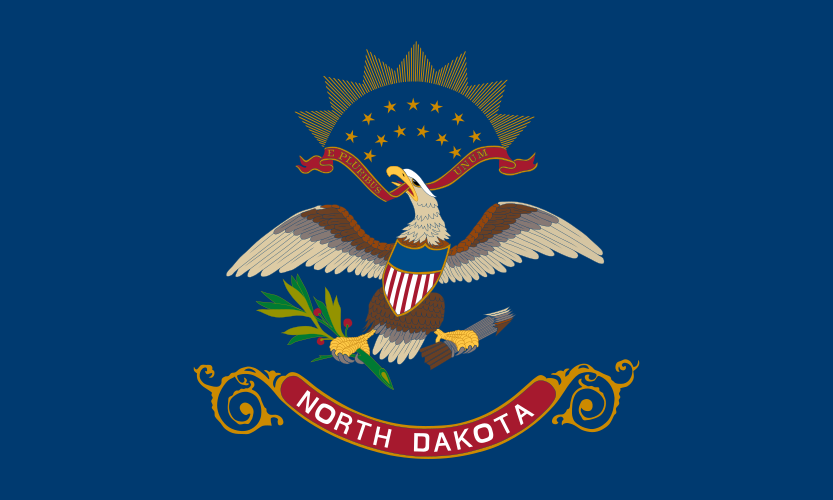
State Flag

Pennsylvania
Capital
Harrisburg
State Bird
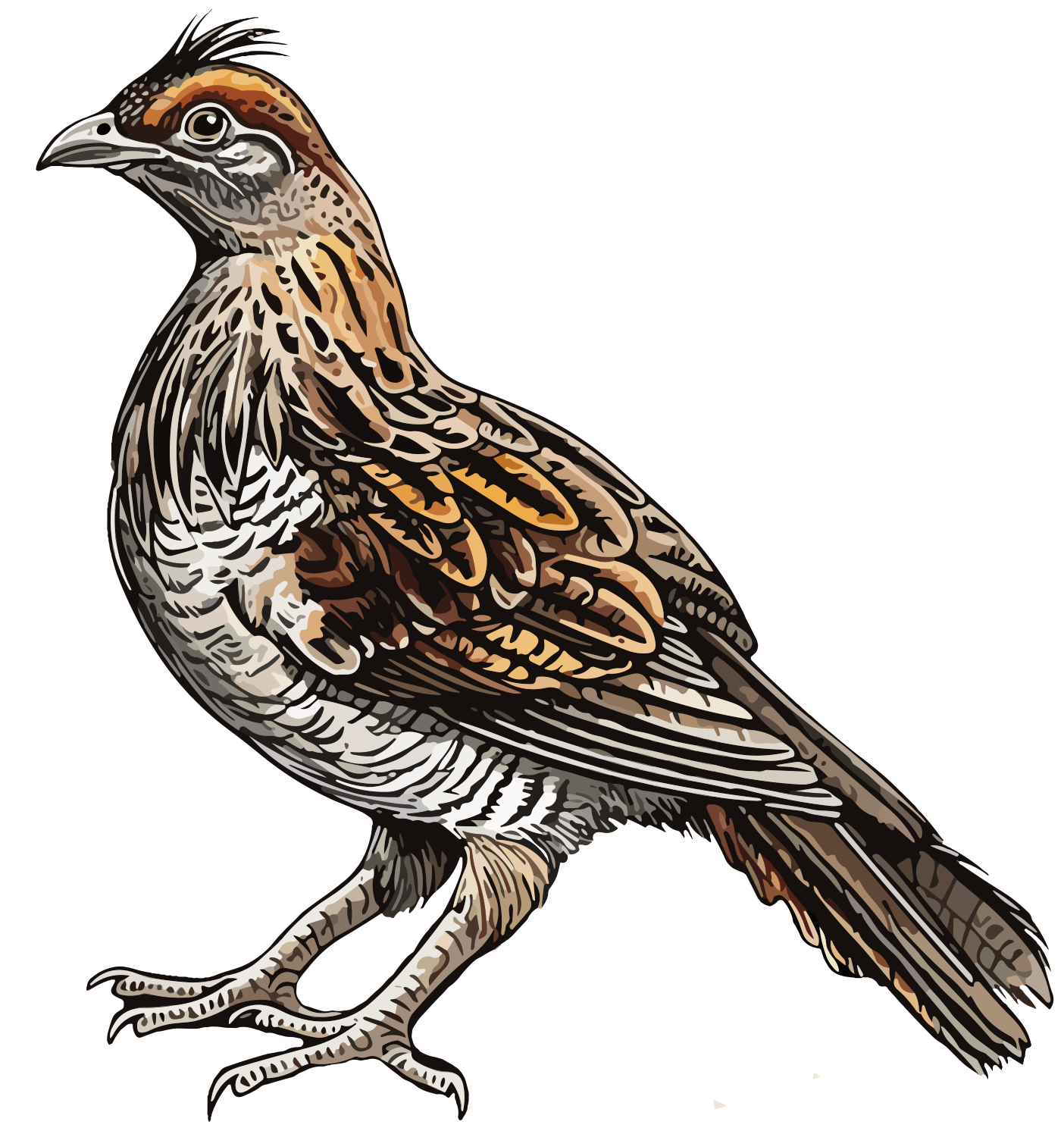
Ruffed Grouse
Statehood
December 12, 1787
State Flower
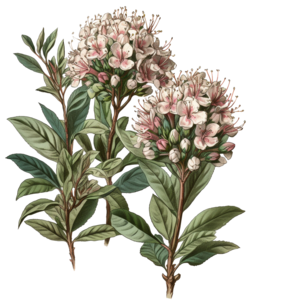
Mountain Laurel
Population
13 million (2020)
Answer
Pennsylvania experiences a humid continental climate with four distinct seasons, resulting in varied weather year-round. Summers tend to be warm and humid, with average high temperatures ranging from the mid-70s to mid-80s Fahrenheit, particularly in cities like Philadelphia and Pittsburgh. Winters can be cold and snowy, especially in the northern and western parts of the state, with temperatures often dipping below freezing and snowfall common from December through February. Spring and fall are transitional seasons marked by moderate temperatures and occasional rainfall.
The state's geography, including the Appalachian Mountains and proximity to the Great Lakes, influences its weather patterns. Eastern Pennsylvania typically sees slightly milder winters compared to the west and north. Rainfall is fairly evenly distributed throughout the year, averaging around 40 to 45 inches annually, which supports the state's forests and agriculture. Urban areas may experience a slight heat island effect in summer, while rural regions can have more temperature variation. Overall, Pennsylvania’s weather reflects typical northeastern U.S. seasonal changes, supporting diverse outdoor activities and a variety of ecosystems.
Key Points:
- Pennsylvania has four distinct seasons with varied weather year-round.
- Summers are warm and humid, while winters are cold with frequent snow.
- Rainfall is evenly spread, averaging 40 to 45 inches annually statewide.
This seasonal climate influences lifestyle and economy throughout Pennsylvania.
The state's geography, including the Appalachian Mountains and proximity to the Great Lakes, influences its weather patterns. Eastern Pennsylvania typically sees slightly milder winters compared to the west and north. Rainfall is fairly evenly distributed throughout the year, averaging around 40 to 45 inches annually, which supports the state's forests and agriculture. Urban areas may experience a slight heat island effect in summer, while rural regions can have more temperature variation. Overall, Pennsylvania’s weather reflects typical northeastern U.S. seasonal changes, supporting diverse outdoor activities and a variety of ecosystems.
Key Points:
- Pennsylvania has four distinct seasons with varied weather year-round.
- Summers are warm and humid, while winters are cold with frequent snow.
- Rainfall is evenly spread, averaging 40 to 45 inches annually statewide.
This seasonal climate influences lifestyle and economy throughout Pennsylvania.
Ask another question
🌦 Weather in Harrisburg - June 12, 2026
🏙 Popular Cities in Pennsylvania
Advertisement
📰 News in Pennsylvania
- Pennsylvania is working to fill a spot in Trump’s ‘Great American State Fair’ as other Democratic-led states boycott
- Pennsylvania family charged after locking children in attic with bed bugs: police
- Witnesses describe blast from propane explosion at Pennsylvania home in Clinton Township, Wayne County
- Massive explosion rocks Pennsylvania community, injuring 3 and causing 2 homes to collapse
- 3 homes burn to the ground after explosion outside Pa. residence, state police say
- Thousands of power outages in Western Pennsylvania after severe storms
- Strong storms topple trees, bring down wires in Western Pennsylvania
- Thousands without power after severe storms roll through central Pennsylvania
- 87-year-old Berks County man wins $10,000 a month for life
- Winning Pennsylvania Lottery ticket sold in Perry County
- Check your tickets: Someone in Perry County won $200K
- Pennsylvania State Police Liquor Control Report: Underage drinking, refilling liquor bottles