What is the weather like year-round?
Question & Answer about Minnesota
Updated June 11, 2026

Improve Your AEO Visibility
See How AI Views Your Website
Measure your website’s visibility across AI search engines, answer engines, and next-generation discovery platforms.
Powered by getAIeo
Minnesota State Facts
State Flag

Minnesota
Capital
Saint Paul
State Bird
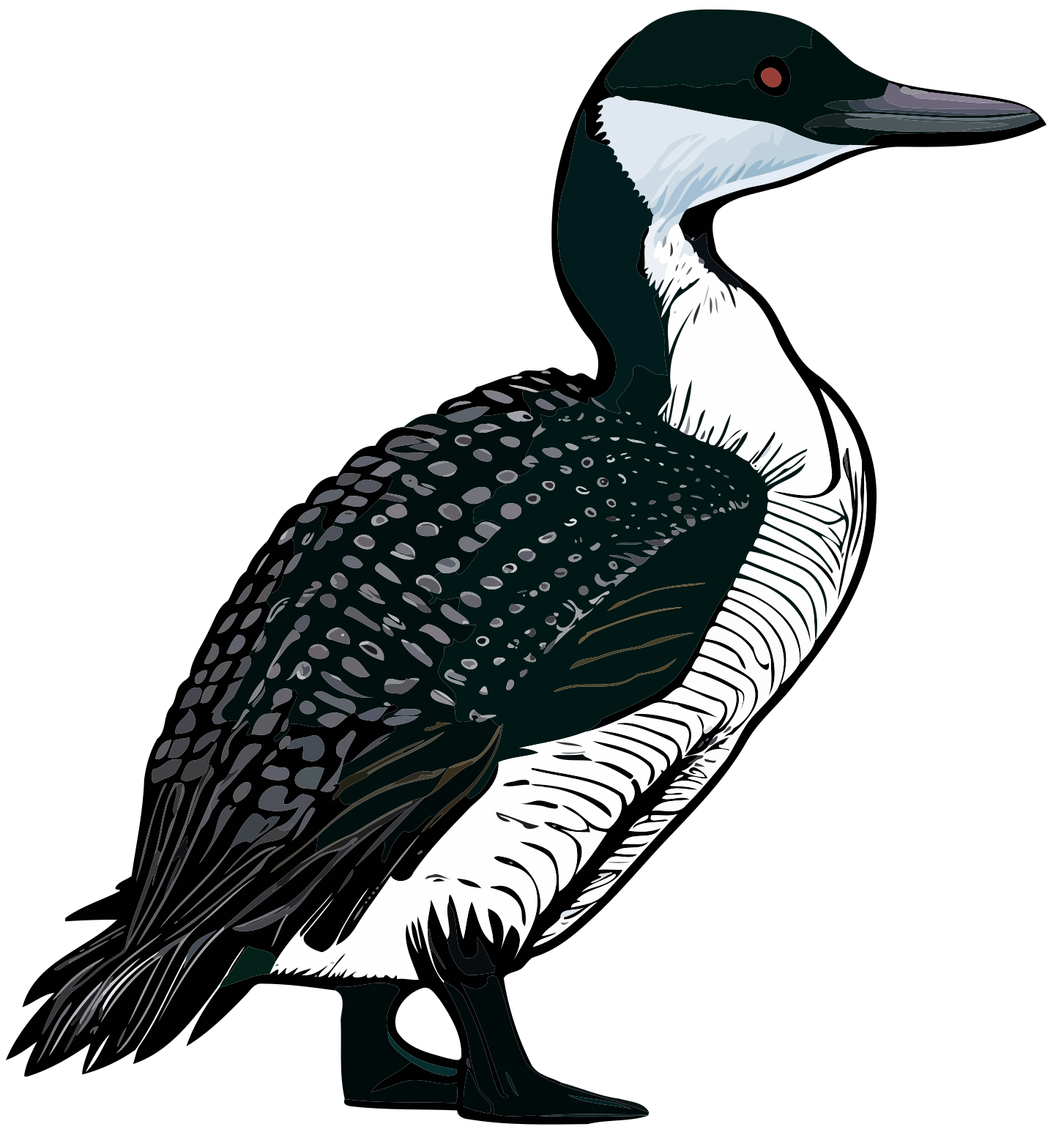
Common Loon
Statehood
May 11, 1858
State Flower

Pink-White Lady Slipper
Population
5.7 million (2020)
Answer
Minnesota experiences a continental climate with four distinct seasons, characterized by cold winters, warm summers, and moderate spring and fall transitions. The state’s weather varies significantly throughout the year, influenced by its northern location and inland geography.
Winters in Minnesota, especially from December through February, are typically very cold, with average temperatures often below freezing and frequent snowfall. Cities like Minneapolis and St. Paul regularly see snow accumulation, and temperatures can drop below 0°F (-18°C) during cold spells. Spring arrives gradually from March to May, bringing milder temperatures and increasing rainfall as the snow melts. Summers, from June to August, are warm to hot, with average highs ranging from the mid-70s to mid-80s °F (24-30°C), and occasional humidity and thunderstorms. Fall, from September to November, features cooling temperatures and colorful foliage, with crisp, clear days becoming more common as winter approaches. Overall, Minnesota’s weather is marked by its variability and pronounced seasonal changes.
Key Points:
- Minnesota has a continental climate with cold winters and warm summers featuring distinct seasonal changes.
- Winters are cold and snowy, often dropping below 0°F, while summers are warm to hot with occasional humidity.
Winters in Minnesota, especially from December through February, are typically very cold, with average temperatures often below freezing and frequent snowfall. Cities like Minneapolis and St. Paul regularly see snow accumulation, and temperatures can drop below 0°F (-18°C) during cold spells. Spring arrives gradually from March to May, bringing milder temperatures and increasing rainfall as the snow melts. Summers, from June to August, are warm to hot, with average highs ranging from the mid-70s to mid-80s °F (24-30°C), and occasional humidity and thunderstorms. Fall, from September to November, features cooling temperatures and colorful foliage, with crisp, clear days becoming more common as winter approaches. Overall, Minnesota’s weather is marked by its variability and pronounced seasonal changes.
Key Points:
- Minnesota has a continental climate with cold winters and warm summers featuring distinct seasonal changes.
- Winters are cold and snowy, often dropping below 0°F, while summers are warm to hot with occasional humidity.
Ask another question
🌦 Weather in Saint Paul - June 11, 2026
🏙 Popular Cities in Minnesota
Advertisement
📰 News in Minnesota
- Minnesota State Fair unveils new cookbook looking back at 50 years of blue ribbon winners
- Minnesota Twins at Detroit Tigers Game Story, Scores/Highlights
- Man pleads guilty to killing a Minnesota lawmaker and her husband while posing as an officer
- Counterpoint | Minnesota, I love you — just the way you are
- How long will Justin Jefferson stay in Minnesota? Kyler Murray, J.J. McCarthy can stop the clock from ticking
- 1993 Minnesota lake victim identified, investigation into her death remains active
- Minnesota man marks FBI's first arrest from DOJ's 'Most Wanted Fraudsters' list
- Vance Boelter admits to Minnesota political killings, pleads guilty in federal case
- Minnesota weather: Storms pass through state leading to quiet night
- Minnesota ATVers help rescue missing woman stuck in mud for 3 days: "It had to be God."
- Man accused of killing Minnesota lawmaker and her husband pleads guilty
- Landowners can apply for second round of Minnesota DNR reforestation funding : Jun 11, 2026 | News release