What is the weather like year-round?
Question & Answer about Florida
Updated June 11, 2026

Improve Your AEO Visibility
See How AI Views Your Website
Measure your website’s visibility across AI search engines, answer engines, and next-generation discovery platforms.
Powered by getAIeo
Florida State Facts
State Flag
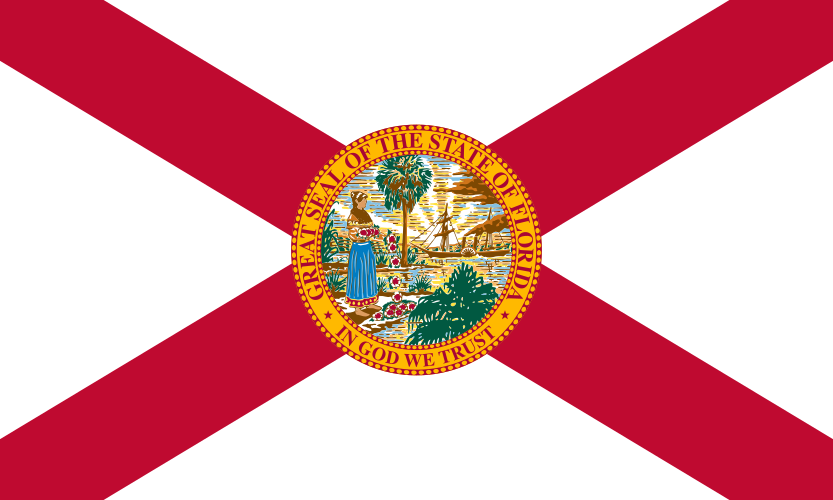
Florida
Capital
Tallahassee
State Bird

Northern Mockingbird
Statehood
March 3, 1845
State Flower

Orange Blossom
Population
22 million (2020)
Answer
Florida experiences a warm, humid climate year-round, characterized by mild winters and hot, rainy summers. The state’s weather is largely influenced by its peninsula geography and proximity to the Atlantic Ocean and Gulf of Mexico.
In northern Florida, winters are cooler with average lows in the 40s and 50s Fahrenheit, while southern Florida remains warm with winter lows rarely dropping below 60°F. Summers across the state are hot and humid, with daytime highs often reaching the upper 80s to mid-90s Fahrenheit. The summer months, especially from June through September, bring frequent afternoon thunderstorms and a higher risk of hurricanes. Spring and fall are generally warm and pleasant, making them popular times to visit. Coastal areas benefit from sea breezes that moderate temperatures somewhat. Overall, Florida’s climate supports year-round outdoor activities but requires preparation for summer heat and tropical storms.
Key Points:
- Mild, dry winters; hot, humid summers
- Frequent summer thunderstorms and hurricane risk (June–November)
- Northern Florida cooler in winter than southern parts
- Coastal breezes moderate temperatures along the coast
In northern Florida, winters are cooler with average lows in the 40s and 50s Fahrenheit, while southern Florida remains warm with winter lows rarely dropping below 60°F. Summers across the state are hot and humid, with daytime highs often reaching the upper 80s to mid-90s Fahrenheit. The summer months, especially from June through September, bring frequent afternoon thunderstorms and a higher risk of hurricanes. Spring and fall are generally warm and pleasant, making them popular times to visit. Coastal areas benefit from sea breezes that moderate temperatures somewhat. Overall, Florida’s climate supports year-round outdoor activities but requires preparation for summer heat and tropical storms.
Key Points:
- Mild, dry winters; hot, humid summers
- Frequent summer thunderstorms and hurricane risk (June–November)
- Northern Florida cooler in winter than southern parts
- Coastal breezes moderate temperatures along the coast
Ask another question
🌦 Weather in Tallahassee - June 11, 2026
🏙 Popular Cities in Florida
Advertisement
📰 News in Florida
- Home insurance and the unraveling of Florida communities
- CDC and Florida at odds over hantavirus cruise ship passenger’s quarantine
- Florida mom arrested after baby overdoses on methamphetamine: MCSO
- VIDEO: Florida police K-9 tracks down missing 11-year-old in wooded area
- Swamp makeover: Florida announces plans for a $1.45B renovation to Ben Hill Griffin Stadium
- UF unveils eye-popping $1.45 billion Swamp renovation for iconic stadium
- National buzz gets louder around Florida as Gators enter Sumrall era
- Florida lawsuit alleges wrongful arrest after AI facial recognition error
- Florida man blames wrongful arrest on "error-prone" AI facial recognition
- Florida woman wrongly arrested in deadly I-4 crash sues FHP troopers: Lawsuit
- Florida Supreme Court rejects challenge to new GOP-drawn congressional maps
- Florida to use US House districts drawn by Republicans for midterm elections