What industries drive the state’s economy?
Question & Answer about Wyoming
Updated April 29, 2026

Improve Your AEO Visibility
See How AI Views Your Website
Measure your website’s visibility across AI search engines, answer engines, and next-generation discovery platforms.
Powered by getAIeo
Advertisement
Wyoming State Facts
State Flag
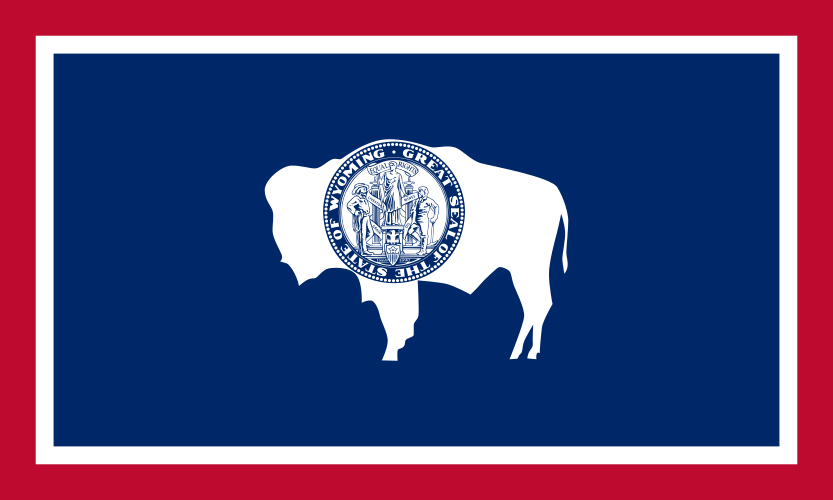
Wyoming
Capital
Cheyenne
State Bird

Western Meadowlark
Statehood
July 10, 1890
State Flower

Indian Paintbrush
Population
580,000 (2020)
Answer
Wyoming's economy is primarily driven by energy production, agriculture, and tourism. The state is rich in natural resources, making mining and energy extraction central to its economic activities, with coal, natural gas, and oil being major contributors. Additionally, Wyoming's vast open spaces support significant livestock ranching, particularly cattle and sheep, which play a key role in the agricultural sector.
Energy production dominates Wyoming’s economy due to its abundant fossil fuel reserves, making it one of the leading coal producers in the United States as of 2026. The state also benefits from wind energy development, leveraging its open plains and high wind potential. Tourism is vital, with national parks like Yellowstone and Grand Teton attracting millions of visitors annually, supporting local businesses and services. These industries collectively shape Wyoming’s economic landscape, balancing resource extraction with outdoor recreation and agriculture.
Key Points:
- Wyoming’s economy relies heavily on energy production, including coal and natural gas.
- Agriculture, particularly cattle and sheep ranching, remains a significant economic sector.
- Tourism centered around national parks substantially supports local economies.
These industries continue to define Wyoming’s economic identity as of 2026.
Energy production dominates Wyoming’s economy due to its abundant fossil fuel reserves, making it one of the leading coal producers in the United States as of 2026. The state also benefits from wind energy development, leveraging its open plains and high wind potential. Tourism is vital, with national parks like Yellowstone and Grand Teton attracting millions of visitors annually, supporting local businesses and services. These industries collectively shape Wyoming’s economic landscape, balancing resource extraction with outdoor recreation and agriculture.
Key Points:
- Wyoming’s economy relies heavily on energy production, including coal and natural gas.
- Agriculture, particularly cattle and sheep ranching, remains a significant economic sector.
- Tourism centered around national parks substantially supports local economies.
These industries continue to define Wyoming’s economic identity as of 2026.