What are property taxes like here?
Question & Answer about Kansas
Updated June 11, 2026

Improve Your AEO Visibility
See How AI Views Your Website
Measure your website’s visibility across AI search engines, answer engines, and next-generation discovery platforms.
Powered by getAIeo
Kansas State Facts
State Flag
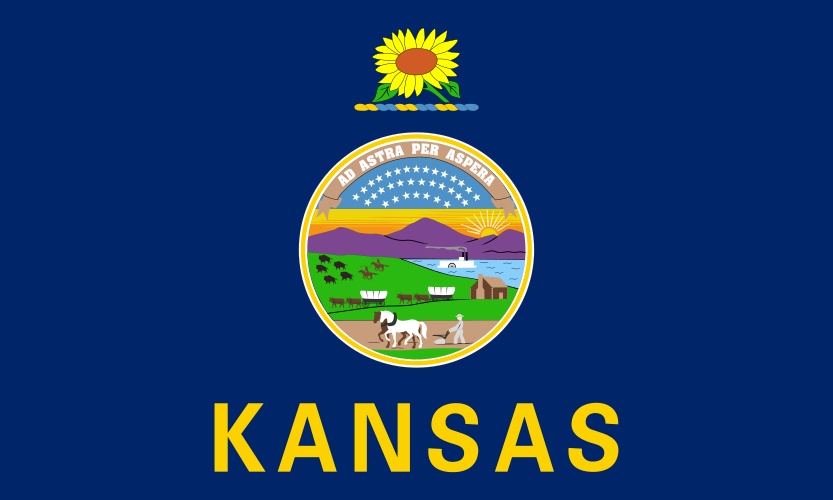
Kansas
Capital
Topeka
State Bird

Western Meadowlark
Statehood
January 29, 1861
State Flower

Sunflower
Population
2.9 million (2020)
Answer
In Kansas, property taxes are moderate compared to national averages but can vary significantly depending on the county and school district. The state relies heavily on property taxes to fund local services, especially public schools, which makes property tax rates an important consideration for homeowners.
Kansas calculates property taxes based on the assessed value of the property, which is typically 11.5% of the appraised market value for residential properties. The effective property tax rate in Kansas generally ranges from about 1.3% to 1.5% of the assessed value, but this can fluctuate depending on local levies. Urban areas like Wichita, Overland Park, and Kansas City tend to have higher property tax rates due to greater funding needs for schools and infrastructure, while rural counties often have lower rates. Additionally, Kansas offers some property tax relief programs, including exemptions for seniors, disabled veterans, and agricultural landowners.
Overall, property taxes in Kansas are a significant but manageable expense for property owners, with local variations driven by community services and school funding priorities.
Key Points:
- Property taxes based on 11.5% assessed value of market price
- Effective rates around 1.3% to 1.5%, varying by county
- Higher rates in urban areas
Kansas calculates property taxes based on the assessed value of the property, which is typically 11.5% of the appraised market value for residential properties. The effective property tax rate in Kansas generally ranges from about 1.3% to 1.5% of the assessed value, but this can fluctuate depending on local levies. Urban areas like Wichita, Overland Park, and Kansas City tend to have higher property tax rates due to greater funding needs for schools and infrastructure, while rural counties often have lower rates. Additionally, Kansas offers some property tax relief programs, including exemptions for seniors, disabled veterans, and agricultural landowners.
Overall, property taxes in Kansas are a significant but manageable expense for property owners, with local variations driven by community services and school funding priorities.
Key Points:
- Property taxes based on 11.5% assessed value of market price
- Effective rates around 1.3% to 1.5%, varying by county
- Higher rates in urban areas
Ask another question
🌦 Weather in Topeka - June 11, 2026
🏙 Popular Cities in Kansas
Advertisement
📰 News in Kansas
- Storm threat winding down tonight, but severe weather could be back on Saturday
- Beloved KC drag entertainer has cancer, again. Jennifer Holliday is coming to help
- 'Enough is enough:' Lucas seeks receivership for historic Fed building as financial, legal issues persist
- Kansas Democratic governor hopefuls trade accusations over Chiefs stadium deal
- Police: Man killed after argument erupts into shooting inside Kansas City convenience store
- After admitting to dumping teen’s body in ravine, Kansas man now faces murder
- Former TV, podcast co-host identified as victim of deadly Sunday shooting in KCK
- 16 Kansas City bars approved to stay open until 5 a.m. during World Cup
- Kansas City's FIFA Fan Fest opens, featuring live music, local food and soccer celebrations
- Kansas City fans wait longer for FIFA Fan Festival after weather backs up Thursday opening
- Tornado Watch issued for 17 Kansas counties Wednesday
- Tornadoes reported as severe weather hits Kansas