Is this a good state to start a business?
Question & Answer about California
Updated June 11, 2026
Improve Your AEO Visibility
See How AI Views Your Website
Measure your website’s visibility across AI search engines, answer engines, and next-generation discovery platforms.
Powered by getAIeo
California State Facts
State Flag
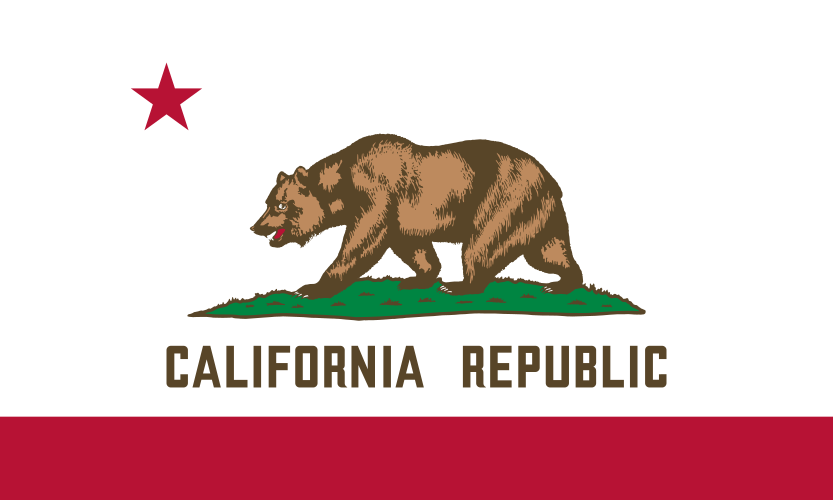
California
Capital
Sacramento
State Bird

California Quail
Statehood
September 9, 1850
State Flower

California Poppy
Population
39 million (2020)
Answer
California is generally considered a strong state to start a business due to its large economy, diverse industries, and access to innovation hubs. However, it also presents challenges such as high taxes and regulatory complexities that entrepreneurs should carefully consider.
California boasts the largest state economy in the U.S., driven by sectors like technology, entertainment, agriculture, and manufacturing. Cities like San Francisco, Los Angeles, and San Diego offer extensive networking opportunities, access to venture capital, and skilled talent pools. The state’s innovation ecosystem, especially in Silicon Valley, makes it attractive for startups in tech and biotech. On the downside, California has relatively high corporate taxes, strict labor laws, and complex regulatory requirements that can increase operational costs and administrative burdens. Real estate and living costs are also among the highest in the nation, which can impact both business expenses and employee recruitment. Overall, while California provides vast opportunities and resources, entrepreneurs should weigh these benefits against the costs and regulatory environment to determine if it aligns with their business model and goals.
Key Points:
- Largest U.S. economy with diverse industries and innovation hubs
- Strong access to talent, capital, and networking in major cities
- High taxes, regulatory complexity, and living costs pose challenges
California boasts the largest state economy in the U.S., driven by sectors like technology, entertainment, agriculture, and manufacturing. Cities like San Francisco, Los Angeles, and San Diego offer extensive networking opportunities, access to venture capital, and skilled talent pools. The state’s innovation ecosystem, especially in Silicon Valley, makes it attractive for startups in tech and biotech. On the downside, California has relatively high corporate taxes, strict labor laws, and complex regulatory requirements that can increase operational costs and administrative burdens. Real estate and living costs are also among the highest in the nation, which can impact both business expenses and employee recruitment. Overall, while California provides vast opportunities and resources, entrepreneurs should weigh these benefits against the costs and regulatory environment to determine if it aligns with their business model and goals.
Key Points:
- Largest U.S. economy with diverse industries and innovation hubs
- Strong access to talent, capital, and networking in major cities
- High taxes, regulatory complexity, and living costs pose challenges
Ask another question
🌦 Weather in Sacramento - June 11, 2026
🏙 Popular Cities in California
Advertisement
📰 News in California
- El Niño looks like a whopper. Here's how that changes California's rainfall.
- Opinion | California’s Excuses Are Damaging Faith in Government
- Sutter Health launches California’s first full-scale mobile simulation lab, expanding clinical training statewide
- World Cup 2026: SoCal gears up for tournament ahead of matches at SoFi Stadium
- Commentary: In Orange County, a progressive Latina pol beats back well-funded haters — again
- Video shows California cop accidentally shooting fellow cop in ‘horseplay’ incident
- Steyer’s exit from the California governor’s race could spell bad news for climate policy
- The facts didn’t fit Trump’s California conspiracy theory. So he adjusted the conspiracy theory
- Amid slew of corporate tax ideas, Newsom chose one likely to hit people’s premiums
- I moved from Canada to California in my 40s. It meant giving up almost everything, but I did it for love.
- Why Is California Still Counting Votes? And Other Questions About How Our Elections Actually Work
- NOAA: El Niño is here and could become very strong this winter. What that means for NorCal