How is the public school system overall?
Question & Answer about Kansas
Updated June 11, 2026

Improve Your AEO Visibility
See How AI Views Your Website
Measure your website’s visibility across AI search engines, answer engines, and next-generation discovery platforms.
Powered by getAIeo
Kansas State Facts
State Flag
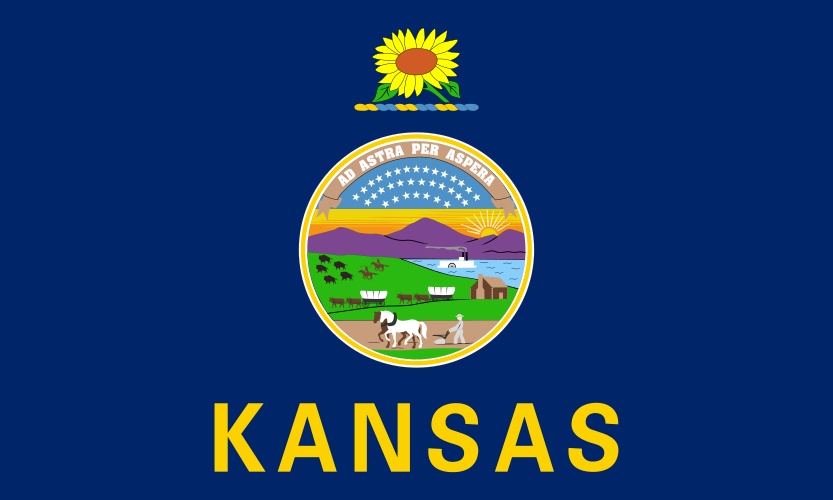
Kansas
Capital
Topeka
State Bird

Western Meadowlark
Statehood
January 29, 1861
State Flower

Sunflower
Population
2.9 million (2020)
Answer
Kansas has a public school system that is generally regarded as solid but faces challenges common to many Midwestern states, including funding disparities and rural access issues. The state emphasizes local control, with individual school districts managing their own schools, leading to variability in resources and educational outcomes across regions.
Overall, Kansas public schools provide a standard curriculum aligned with state guidelines, including requirements in core subjects like English, math, science, and social studies. Larger urban districts such as Wichita and Overland Park tend to have more resources and diverse program offerings, including Advanced Placement (AP) courses and extracurricular activities. Rural districts, which serve a significant portion of Kansas students, sometimes struggle with declining enrollment and limited funding, affecting class sizes and course availability. The state has made efforts to improve teacher quality and accountability through assessment and professional development initiatives. Additionally, Kansas ranks around the national average in standardized test scores and graduation rates, though some achievement gaps persist.
Key Points:
- Local control leads to variability in school quality and resources
- Urban districts generally have more comprehensive programs than rural areas
- Statewide standards ensure consistency in curriculum basics
- Challenges include funding disparities and rural access issues
- Kansas performs near the national average in key educational metrics
Overall, Kansas public schools provide a standard curriculum aligned with state guidelines, including requirements in core subjects like English, math, science, and social studies. Larger urban districts such as Wichita and Overland Park tend to have more resources and diverse program offerings, including Advanced Placement (AP) courses and extracurricular activities. Rural districts, which serve a significant portion of Kansas students, sometimes struggle with declining enrollment and limited funding, affecting class sizes and course availability. The state has made efforts to improve teacher quality and accountability through assessment and professional development initiatives. Additionally, Kansas ranks around the national average in standardized test scores and graduation rates, though some achievement gaps persist.
Key Points:
- Local control leads to variability in school quality and resources
- Urban districts generally have more comprehensive programs than rural areas
- Statewide standards ensure consistency in curriculum basics
- Challenges include funding disparities and rural access issues
- Kansas performs near the national average in key educational metrics
Ask another question
🌦 Weather in Topeka - June 11, 2026
🏙 Popular Cities in Kansas
Advertisement
📰 News in Kansas
- Storm threat winding down tonight, but severe weather could be back on Saturday
- Beloved KC drag entertainer has cancer, again. Jennifer Holliday is coming to help
- Kansas City FIFA Fan Fest opens after delayed by rain on first day
- Kansas Democratic governor hopefuls trade accusations over Chiefs stadium deal
- Police: Man killed after argument erupts into shooting inside Kansas City convenience store
- After admitting to dumping teen’s body in ravine, Kansas man now faces murder
- Former TV, podcast co-host identified as victim of deadly Sunday shooting in KCK
- Thousands of World Cup volunteers to welcome soccer fans to Kansas City
- Kansas City's FIFA Fan Fest opens, featuring live music, local food and soccer celebrations
- Kansas City fans wait longer for FIFA Fan Festival after weather backs up Thursday opening
- Tornado Watch issued for 17 Kansas counties Wednesday
- Tornadoes reported as severe weather hits Kansas