How cold does it get during the winter months?
Question & Answer about Connecticut
Updated June 11, 2026

Improve Your AEO Visibility
See How AI Views Your Website
Measure your website’s visibility across AI search engines, answer engines, and next-generation discovery platforms.
Powered by getAIeo
Connecticut State Facts
State Flag
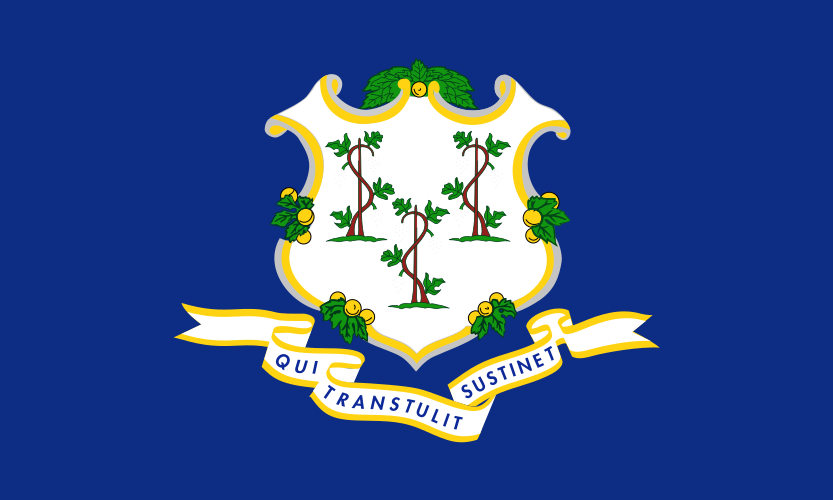
Connecticut
Capital
Hartford
State Bird
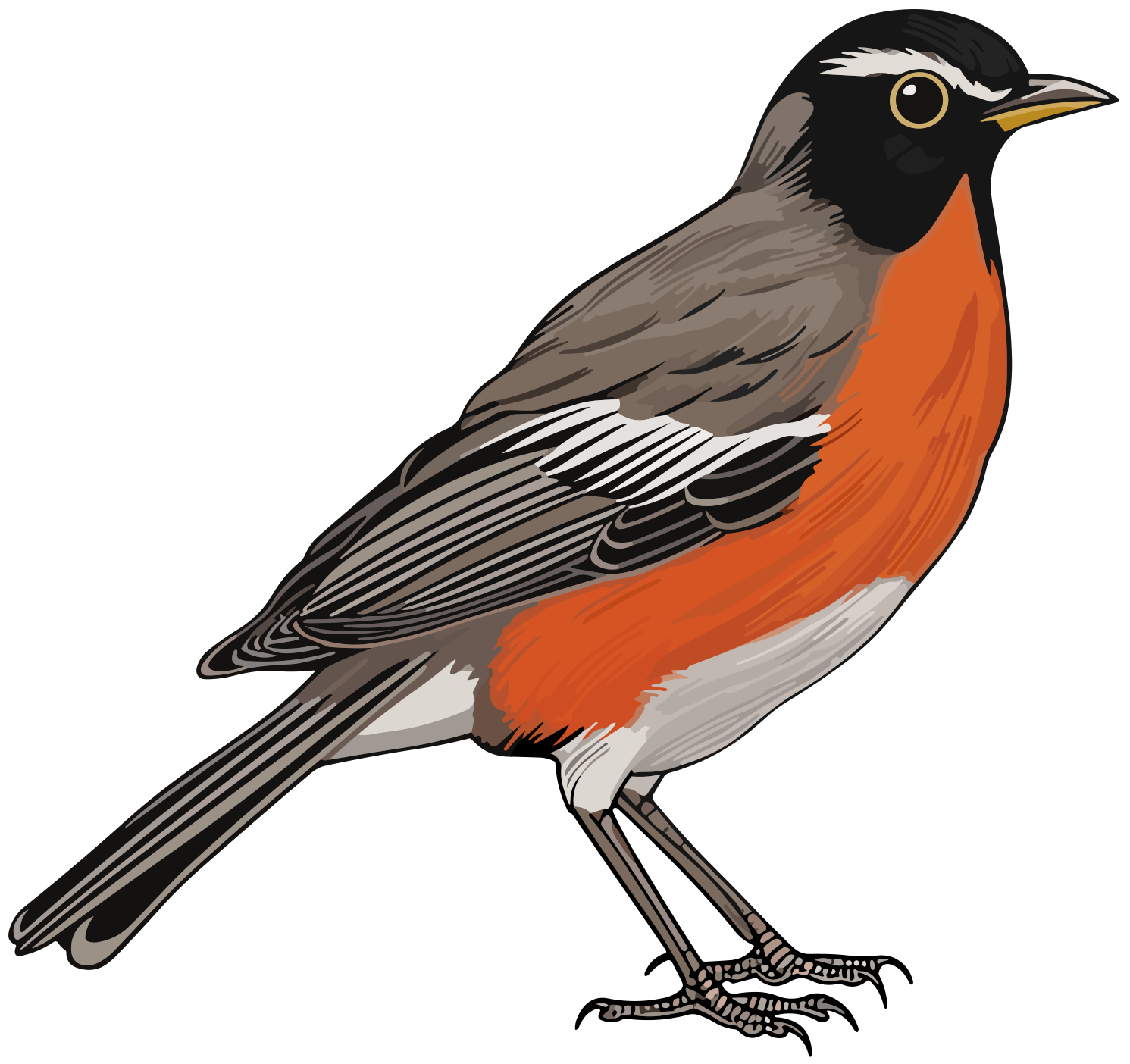
American Robin
Statehood
January 9, 1788
State Flower

Mountain Laurel
Population
3.6 million (2020)
Answer
Winter temperatures in Connecticut typically range from the mid-20s to mid-30s Fahrenheit (-4 to 2 degrees Celsius), with colder conditions possible during Arctic cold snaps. Coastal areas like New Haven and Stamford tend to be milder due to the Atlantic Ocean’s moderating influence, while inland and northwestern regions, including towns like Torrington and Litchfield, often experience colder temperatures and more snow.
During the coldest months of December through February, average lows frequently dip into the 20s Fahrenheit, and it is not uncommon for temperatures to fall below 10°F (-12°C) during particularly harsh winter storms. Snowfall is common across the state, with annual totals varying from around 20 inches along the coast to over 50 inches in the northwest hills. The combination of cold air masses from Canada and Atlantic moisture often leads to significant snow events and occasional ice storms.
Key Points:
- Average winter lows: mid-20s to mid-30s °F
- Colder inland and northwest, milder coastal areas
- Occasional Arctic cold snaps can bring sub-10°F temperatures
- Snowfall ranges from 20 to 50+ inches annually depending on location
During the coldest months of December through February, average lows frequently dip into the 20s Fahrenheit, and it is not uncommon for temperatures to fall below 10°F (-12°C) during particularly harsh winter storms. Snowfall is common across the state, with annual totals varying from around 20 inches along the coast to over 50 inches in the northwest hills. The combination of cold air masses from Canada and Atlantic moisture often leads to significant snow events and occasional ice storms.
Key Points:
- Average winter lows: mid-20s to mid-30s °F
- Colder inland and northwest, milder coastal areas
- Occasional Arctic cold snaps can bring sub-10°F temperatures
- Snowfall ranges from 20 to 50+ inches annually depending on location
Ask another question
🌦 Weather in Hartford - June 11, 2026
🏙 Popular Cities in Connecticut
Advertisement
📰 News in Connecticut
- PHOTOS: Developer proposes tunnel-bridge plans across Long Island Sound
- ICE is using camera crews to film arrests in Danbury. It’s concerning, immigrant advocates say
- Potentially Severe Thunderstorms Could Hit Parts Of Connecticut Later Thursday
- 3 CT children die of apparent overdose as ‘Benadryl challenge’ spreads online
- 3 Connecticut children die from apparent diphenhydramine overdoses, no confirmed link to viral 'Benadryl challenge'
- 3 Connecticut children die of apparent overdose, officials issue warning
- Springfield student dies on field trip at High Meadow in Connecticut
- Springfield eighth grader dies on field trip to Connecticut camp
- Student dies after reported drowning at Granby event venue: Officials
- Governor Lamont Activates Extreme Hot Weather Protocol as Heat Wave of Approaches
- What to know heading into potential Connecticut heat wave
- Heat and humidity on the rise for Thursday